If you’ve ever messed around with shaping wood, plastic, or even soft metal for custom projects, you’ve probably invested in a set of profile router bits. They’re those weirdly shaped little cutters that let you make intricate edges—like rounded overends, bead profiles, or those fancy decorative grooves that make a DIY piece look like it came from a high-end furniture shop. I’m a profile router bit supplier, and let me tell you, the number one question I get from new and regular customers alike is: “Can I sharpen my profile router bits, or do I have to buy new ones every time they go dull?” Profile Router Bit
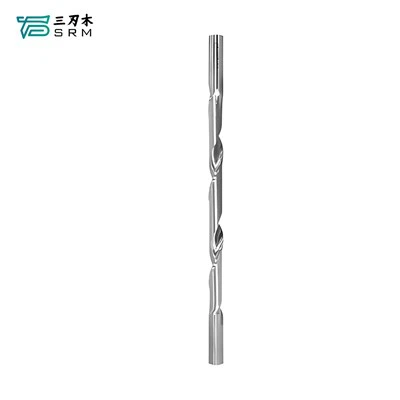
First off, let’s cut to the chase—yes, most profile router bits can be sharpened. But that “most” is key here. Not all bits are created equal, and trying to sharpen the wrong kind, or doing it the wrong way, will leave you with a cutter that’s worse than a dull one. I’ve seen guys at the woodworking shop bring in a $50 carbide profile bit they ruined because they grabbed a cheap hand sharpener from the hardware store and tried to grind the profile freehand. It’s a sad sight, trust me.
Let’s break down why profile bits go dull in the first place, because that sets the whole stage. Unlike straight bits that just cut a straight line, profile bits have these complex, custom-shaped edges—sometimes multiple flutes, sometimes a curved profile that’s not a simple radius. When you use them, they’re spinning thousands of times a minute, digging into whatever material you’re working with, and friction plus pressure wears down the cutting edges over time. If you’re cutting hard maple, MDF with glue knots, or even pressure-treated lumber with all that resin, that wear happens even faster. Dull bits don’t just make bad cuts—they burn the material, leave fuzzy edges, and can even kick back your workpiece, which is a safety hazard. So ignoring a dull profile bit isn’t just a quality issue; it’s a dangerous one.
Now, let’s talk about what kind of profile bits you can actually sharpen. The vast majority of the ones we supply are carbide-tipped. Carbide is super hard—way harder than high-speed steel (HSS)—which is why profile bits with carbide tips stay sharp way longer. HSS bits are cheaper, but they dull fast and heat up easy, so sharpening them works, but they don’t hold an edge for long after. The big no-nos for sharpening are solid carbide bits that have a micro-grain coating, or bits with brazed carbide that’s so thin you can’t grind any away without ruining the profile. Wait, let’s clarify that: brazed carbide is when the carbide tip is melted and fused to the steel shank of the bit. If you grind too much off, you’ll expose the weak steel underneath, and the edge will chip immediately. Micro-grain coated bits—usually used for super fine finishes—have a very thin outer layer of carbide, so one wrong grind and you’ll take the coating off entirely, leaving a soft edge that dulls in 10 minutes. We always tell customers to check the base of their bit: if it has a visible steel shank and a separate carbide tip, it’s safe to sharpen. If it’s all one solid block of dark gray carbide, that’s a red flag—chances are you can’t sharpen it without killing it.
Next, the right way to sharpen a profile router bit. This isn’t like sharpening a kitchen knife, or even a straight router bit. Profile bits have those specific, non-negotiable shapes—if you mess up the angle or the curve when you sharpen, your finished profile will be off. For example, if you have a bit that makes a 1/2” roundover, sharpening the edge so it’s a 5/8” curve will make your workpiece look lopsided. We recommend two main methods: either send them to a professional sharpening service, or use a CNC grinding machine at home if you’re serious about woodworking and have the right gear.
Professional sharpening is the way to go for most people, honestly. These guys know exactly how to match the original profile, they use precision grinders that control the angle and the amount of material removed, and they’ll balance the bit after sharpening, which is super important. Unbalanced bits vibrate like crazy at high RPM, which can ruin your router, mess up cuts, and even injure you. I hear stories all the time of guys who tried to sharpen their bits at home, didn’t balance them, and ended up with a router that’s now useless. Professional sharpening costs about $10-$15 per bit, depending on the profile complexity, and it’s way cheaper than buying a new $50-$100 bit every time.
If you do want to sharpen at home, skip the cheap hand sharpeners. Get a dedicated router bit sharpening system, like the ones made by Work Sharp or King Arthur’s Tools. These systems have guides that let you set the exact angle for different bit types, and some even have profile templates that match common router bit shapes. The key here is to take it slow—remove as little material as possible. You only need to grind off the tiny dull “grain” that forms on the cutting edge, not reshape the whole thing. If you grind too much, you’ll change the profile, and that’s a one-way ticket to bad cuts. Also, never sharpen a bit by hand freehand—even the best woodworkers I know can’t get a consistent curve or angle that way.
Wait, let’s address a common myth here: some people think sharpening profile bits is just like sharpening any other cutter. No. Because profile bits are single-flute or multi-flute with complex geometries. For example, a ogee bit has a curve going up and a curve going down, so each cutting edge has two separate angles. If you sharpen one edge wrong, your cut will be lopsided. I’ve had customers send back bits they tried to sharpen at home, and half the time the profile is so off they can’t use it at all, even after we try to fix it. That’s a waste of time and money.
Another thing to keep in mind: how often should you sharpen? It depends on how much you use your bits, and what you’re cutting. If you’re a hobbyist who uses them once a month for small projects, you might get a year or more out of a set before sharpening. If you’re a contractor running them 8 hours a day cutting MDF or hardwood, you’ll probably sharpen them every couple of weeks. Also, keep an eye on the burn marks on your material, fuzzy edges, and vibration when you run the bit—those are all signs it’s time to sharpen, not signs you need a new bit.
Now, what about when you actually can’t sharpen a profile bit? Like I said earlier, solid carbide bits with thin micro-coatings, or brazed carbide tips that are too thin. Also, bits that have chipped cutting edges so bad that the chip is deeper than the carbide thickness—you can’t grind that away without exposing the steel. And if you’ve sharpened a bit too many times already, that’s a no-go too. Every time you grind a bit, you remove a tiny bit of material, so eventually you’ll grind down to the steel shank, and that’s when the edge chips. For most bits, you can sharpen them 2-4 times before they’re done, depending on the size and type. That’s a good rule of thumb.
Let me give you a quick example from the shop last month. A regular customer brought in a 1/2” carbide roundover bit he’s had for two years. He uses it to make custom table edges, and he was about to throw it away because he thought it was too dull. We sent it to our go-to sharpening service, and it came back like new. He used it on a big oak table last week, and he texted me saying the cuts were smoother than when he first bought the bit. That’s the kind of thing that makes all the difference—sharpened bits don’t just save money, they let you keep using the same bit for consistent cuts over and over, which is huge for custom projects where you need matching profiles.
Now, I know some of you are thinking: why not just buy new bits? Let’s be real, good profile bits aren’t cheap. A set of 10 carbide profile bits can run you $200-$500, and if you have to replace every single one when it dulls, that adds up fast. Sharpening is a fraction of the cost, and it’s better for the environment too—less waste from throwing away perfectly good bits that just need a tune-up.
But here’s the thing: sharpening is only worth it if you do it right. I see way too many people skip the professional route and ruin good bits because they cut corners. If you’re not comfortable with precision grinding, or you don’t have the tools, send your bits to a reputable sharpening service. It’s worth the small cost to avoid ruining a $80 bit.
At the end of the day, the answer to “Can a profile router bit be sharpened?” is almost always yes—most of the time, with the right approach. It saves you money, it’s better for the planet, and it keeps your custom cuts consistent. The key is knowing which bits can be sharpened, how to do it without messing up the profile, and when it’s time to call it quits and buy a new one.

If you’re not sure whether your profile bit can be sharpened, or you need reliable sharpening for your set, feel free to reach out. We’re here to help you keep your bits sharp, your cuts clean, and your projects on track. Don’t waste money on new bits when a good sharpening can get your favorite ones back to working like they should.
Drill Bit References:
- Woodworking Network. (2022). "Router Bit Sharpening: What You Need to Know."
- Fine Woodworking. (2021). "Profile Router Bit Care and Maintenance."
- Carbide Processors Inc. (2020). "Guide to Sharpening Carbide Cutting Tools."
Huizhou Feisite Precision Tools Co., Ltd.
Huizhou Feisite Precision Tools Co., Ltd. is one of the most professional profile router bit manufacturers and suppliers in China, featured by quality products and good price. Please rest assured to buy profile router bit in stock here and get quotation from our factory. Customized orders are welcome.
Address: 1/B, 3/F. Huiyang Eco-Tech Innovation Park, Liandong U Valley, Sanhe St, Huiyang Dist, Huizhou GuangDong Prov. China
E-mail: Peggy@feisitool.com
WebSite: https://www.feisitool.com/
