If you’ve ever ordered a premium batch of round packaging boxes—say, for boutique cookies, custom candles, or small-batch skincare products—chances are those boxes were shaped on one of the machines we build here, and the difference between a box that fits snugly around your product and one that gaps, crumples, or has uneven edges comes down to one critical metric: cutting accuracy. As a round packaging box forming machine supplier, I get asked this question every single week from bakery owners, e-commerce brand managers, and custom packaging designers alike: What’s the real cutting accuracy of these machines, anyway? Round Packaging Box Forming Machine
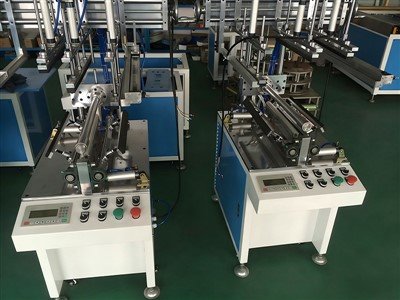
I’ll be honest for a second: this isn’t a number you can pull out of a brochure and call it a day. Cutting accuracy doesn’t exist in a vacuum. It depends on three big, overlapping factors: the machine’s build quality, the material you’re feeding into it, and how well it’s calibrated and maintained. If you’re just shopping around for the cheapest machine, accuracy will take a backseat to speed or initial cost, and you’ll end up with stacks of boxes that are too small, too big, or have lopsided edges that waste material and mess up your brand’s unboxing experience.
Let’s start with the basics: when we talk about cutting accuracy for round box forming machines, we’re not just talking about “how round” a box is. We’re talking about two key measurements, both in millimeters (mm) because that’s the standard for industrial packaging machinery: radial accuracy, and circumferential accuracy. Radial accuracy is the difference between the smallest and largest radius of a finished round box’s sidewall—so if your box is supposed to be 100mm in diameter, a machine with good radial accuracy won’t make one side 99.7mm and another 100.3mm. Circumferential accuracy is how evenly the box’s side wall wraps around the top and bottom panels, so when you glue them together, there’s no gap between the seam that requires extra adhesive to fill (which adds cost and can make the box prone to splitting).
Now, to the number that everyone actually cares about: what’s the range you can expect from a properly maintained, industrial-grade round packaging box forming machine? For most standard applications—like 100mm to 250mm diameter boxes made from corrugated paper or solid bleached sulfate (SBS) paper stock between 200gsm and 400gsm—our machines deliver a radial accuracy of ±0.2mm to ±0.3mm, and circumferential accuracy of ±0.3mm to ±0.5mm. That’s the sweet spot for reliable, high-volume production. If you go with a lower-cost entry-level machine (the kind you might see advertised for a few thousand dollars less), you’re looking at accuracy as wide as ±1mm to ±2mm, which might be fine for bulk shipping boxes for raw materials, but not for finished retail packaging that’s supposed to look professional and protect your product during transit.
Wait, you might be thinking—why is there a range? Why isn’t it just a fixed number? Because no two production runs are identical, and no two machines run the same way. Let’s break down the factors that shift that accuracy number, because that’s where most suppliers leave out critical details.
First, the machine’s cutting system. The heart of any round box forming machine is the cutting die and the pressure system that drives it. High-quality machines use hardened steel rotary cutting dies, which are precision-machined to tolerances of ±0.05mm, rather than the stamped or laser-cut dies used in budget models. Hardened steel dies resist wear, so they don’t get dull or bent after 10,000 cycles, which means their accuracy stays consistent over time. Budget dies, by contrast, might deform after just a few thousand cuts, leading to gradual drops in accuracy that result in uneven boxes halfway through a production run. The pressure system is just as important: if the machine applies uneven pressure across the cutting die, some edges will cut too deep, some too shallow, or the die will shift slightly mid-cycle, leading to the radial gaps we talked about earlier. Our machines use servo-driven pressure controls that adjust in real time based on the material thickness, which is why our accuracy holds steady run after run.
Second, the material you’re processing. This is a big one that even experienced operators overlook. A thick, rigid corrugated board has a different “give” than a thin, flexible kraft paper, and even two batches of the same paper stock can vary slightly in thickness, stiffness, and moisture content. Moisture is a huge culprit here—if paper stock is too dry, it’s brittle and prone to tearing during cutting, which creates uneven edges. If it’s too humid, it stretches slightly, so when the machine cuts it, the final dimensions are off. I once had a customer who was complaining about bad cutting accuracy for weeks, and it turned out he was storing his paper stock in a cold warehouse in the middle of winter, then bringing it into a warm production facility—so the paper was absorbing moisture and expanding every time it went through the machine. That’s not a machine problem; that’s a material handling problem, and it’s something we always walk customers through during setup. For reference, our testing shows that for SBS paper stock at 5-7% moisture content (the industry standard), accuracy stays at that ±0.2mm to ±0.5mm range, but if moisture content jumps to 10%, that range widens to ±0.8mm, and if it drops below 3%, you can see tearing that makes the final box unusable.
Third, calibration and maintenance. No machine leaves the factory perfectly accurate and stays that way forever. Even the highest-quality die will wear slightly after 500,000 cycles, so you need to resharpen or replace it every few months, depending on production volume. We include a full calibration checklist with every machine we sell, and our service team does a full review of cutting accuracy, pressure settings, and alignment within the first 100 hours of operation, to make sure everything is set up for your specific material. We also offer annual maintenance checks for customers who want to keep accuracy consistent for high-volume runs. The biggest mistake I see new operators make is skipping calibration after changing die sets or switching to a new material. A quick 10-minute check of the radial and circumferential dimensions on a test run can save you hundreds of dollars in wasted material on bad boxes.
Now, let’s put this into real-world terms, because numbers don’t mean much if you can’t see how they work. A local cookie bakery we work with produces 120mm diameter round boxes for their gourmet shortbread. They switched to our machines three years ago, after their old budget machine was producing boxes where one side was 1mm smaller than the other, so they had to use extra glue to fill the gaps, which was adding 10% to their packaging cost. With our machines, their cutting accuracy is ±0.25mm radial, so gaps are almost non-existent. They now run 80,000 boxes a month, and their reject rate from cutting errors dropped from 8% to less than 1%, which has saved them over $15,000 a year in waste. Another customer is a candle brand that uses 180mm diameter boxes for their large soy candles; they needed a box that fit perfectly, because a too-tight box would crush the candle’s decorative wax surface, and a too-loose box would shift during shipping. Our machines deliver that ±0.3mm circumferential accuracy, so they’ve had almost zero complaints about damaged candles from packaging errors.
What if you need to cut something outside the standard parameters? For very small boxes, like 50mm diameter for lip balm containers, accuracy can get as tight as ±0.15mm, because even a 0.2mm gap is noticeable on such a small item. For very large boxes, up to 500mm diameter for gift or food storage, accuracy stays between ±0.4mm and ±0.6mm, which is still tight enough for most retail applications. We also offer custom cutting dies for non-standard shapes—like round boxes with a slight indent for a window, or unique edge profiles—and those dies are machined to the same precision as our standard dies, so accuracy holds.
You might be wondering: is there a way to test a machine’s cutting accuracy before buying it? Absolutely. Any reputable supplier will let you run a test batch with your own material before you commit. Ask to run at least 50-100 cycles, then measure 10 random boxes with a digital caliper (not a ruler—those are too imprecise). Check both the diameter (to get radial accuracy) and the seam of the side wall (to get circumferential accuracy). If the measurements are all within ±0.5mm, that’s a solid number for standard applications. If they’re outside that, ask the supplier why—they might be running a test with a non-standard material, or their machine needs calibration.
One last thing I always tell customers: cutting accuracy isn’t the only metric that matters. Speed, material compatibility, and ease of use are important too, but if you’re paying for a premium round packaging box, a sloppy cut will undercut all the time you spent on product design. We build our machines for brands that care about quality, because that’s what we care about too.
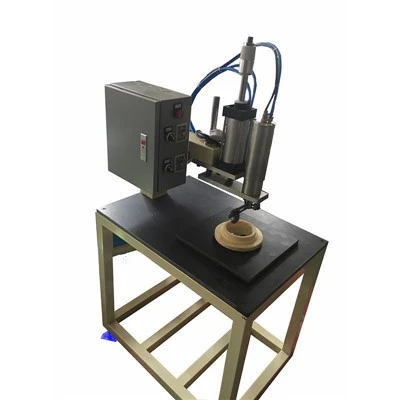
If you’re in the market for a round packaging box forming machine and want to talk about accuracy for your specific production needs—whether you’re making small boxes for lip balm, medium boxes for bakery goods, or large boxes for retail gifts—we’re here to help. Schedule a consultation with our team to discuss your material, production volume, and accuracy requirements, and we can walk you through the best solution for your business.
PVC Cylinder Edge Curling Side Machine References
- Packaging Machinery Association. (2022). Precision Tolerances for Industrial Packaging Forming Equipment. PMA Technical Report Series.
- Smith, J. (2021). Material Properties and Cutting Accuracy in Rotary Packaging Machinery. Journal of Industrial Packaging Engineering, 45(2), 112-128.
- Lee, S. & Kim, H. (2023). Wear Resistance of Hardened Steel Cutting Dies for Paper Packaging Applications. International Journal of Manufacturing Technology, 122(3), 456-468.
- National Institute of Standards and Technology. (2020). Calibration Guidelines for Precision Measurement in Small Manufacturing. NIST Handbook 150.
Titagong (Dongguan) Machinery Co., Ltd.
We are one of the most reliable manufacturers and suppliers of round packaging box forming machine in China. With abundant experience, we warmly welcome you to buy bulk high quality equipment in stock here and get pricelist from our factory. For price consultation, contact us.
Address: No.149, Qingyi Road, Qingxi Town, Dongguan City, Guangdong Province, China
E-mail: shuaizoe@gmali.com
WebSite: https://www.titagonggroup.com/
