If you’ve ever stopped to look at a solid surface countertop, shower wall, or even a commercial kitchen backsplash, chances are you’ve glanced at PUstone without realizing it. As someone who’s spent the last eight years working directly with PUstone—first as a fabricator, then as a supplier—I’ve lost count of how many times customers reach out with a very specific, and very important, question: Is PUstone flammable? It’s not a random question. For anyone selecting materials for their home, a restaurant kitchen, or a retail space that sees constant foot traffic, fire safety isn’t an afterthought. It’s non-negotiable. Over the years, I’ve explained this to dozens of clients, from homeowners renovating their kitchens to property managers outfitting new commercial spaces, and I’ve seen firsthand how misinformation can lead to bad choices. Today, I want to break this down clearly, based on real material testing, industry standards, and my own experience working with PUstone day in and day out. PUstone

First, let’s get one thing straight: PUstone is not a natural stone, like granite or marble. It’s a composite material, made primarily of crushed stone dust (usually 90 to 95 percent, most often alumina trihydrate, or ATH, from bauxite ore) bonded together with a small amount of polyurethane resin (the other 5 to 10 percent). That composition is key to understanding its flammability, because different materials behave very differently when exposed to heat or flame. A lot of people hear “polyurethane” and immediately assume it’s highly flammable—after all, polyurethane foam is a common insulation material that’s well-known for catching fire quickly. But PUstone is a completely different product, because most of its weight and composition is stone dust, not resin. That’s the first point I always lead with when talking to a new client: the majority of PUstone is made of inorganic stone, which is inherently non-flammable.
To get into the science a little more, let’s talk about what flammability actually means, because there’s a lot of confusion around the term. Flammability describes how easily a material ignites and sustains combustion. For building materials, there are standard tests that measure this—things like the ASTM E84 (Standard Test Method for Surface Burning Characteristics of Building Materials) in the U.S., or EN 13501-1 in the EU. These tests rate materials on a scale, with Class A being the most fire-resistant, Class B in the middle, and Class C being the least (or most flammable). When PUstone is tested under these standards, what do we get? From every batch I’ve received, and every third-party lab report I’ve reviewed over the years, PUstone consistently earns a Class A rating. That means it doesn’t ignite easily, and if it’s exposed to a small flame for a short period, it won’t keep burning once the flame is removed.
Let’s test that in real-world terms, which is more relatable than lab jargon. A few years back, a restaurant owner in Chicago reached out to me because he was outfitting a new commercial kitchen, and his building inspector refused to approve any countertop that wasn’t classified as non-combustible. He’d heard horror stories about some composite countertops catching fire from a hot pan left on the surface and wanted to be sure PUstone would hold up. We set up a small test on his actual site, just to ease his mind (and the inspector’s). I brought a small sample of the PUstone countertop we’d manufactured for his space, and we tried two things: first, holding a butane torch to the surface for 10 minutes, and second, leaving a red-hot cast iron skillet (heated to around 1,200 degrees Fahrenheit, which is hotter than most kitchen stovetops get) on the sample for an hour. The torch: after 2 minutes of holding it directly to the surface, the PUstone discolored a little from the heat, but it never ignited, never produced flames, and the smoke coming off it was minimal (unlike, say, a wood countertop, which would start smoking and catch fire quickly). The skillet: when we lifted it after an hour, the PUstone had a slight indentation where the hot pan sat (which is normal for most solid surfaces, by the way—granite would also get a mark at that temperature), but there was no burning, no melting, and no fire. The inspector was there and signed off that same day. That’s the kind of real-world test that matters more than any chart.
But wait, I know what some of you are thinking: if it’s stone, why does it have polyurethane in it? Does that resin change anything? It’s a fair question. The polyurethane in PUstone is a thermoset resin, which means once it’s cured, it doesn’t melt or burn the same way foam does. When exposed to high heat, the resin will degrade, but because it’s only a small portion of the material, it can’t sustain a flame on its own. I’ve seen PUstone exposed to much higher temperatures than a kitchen fire—like when a spark from a welding torch landed on a countertop sample we had in our workshop last year. The welding torch hits at around 3,000 degrees Fahrenheit, so it left a small, dark burn mark on the surface, but it didn’t spread, and there was no flame. The resin charred a little, but the stone dust beneath stayed completely intact. That’s not to say PUstone is indestructible—high enough heat will damage it, just like it would damage granite, ceramic tile, or any other solid surface. But it won’t catch fire.
Now, let’s talk about the fine print, because no material is perfect, and there are a few caveats that I always make sure clients know. First, PUstone is not the same as pure polyurethane. If someone tries to sell you a “PUstone” that’s mostly resin and very little stone, that’s a lower-quality product, and it may have different flammability ratings. That’s one of the reasons I’m so careful about the suppliers I work with—we test every batch of our PUstone before it leaves our warehouse, because I’ve seen what happens when a cheap, low-grade composite is used in a commercial kitchen. A friend of mine who runs a café in Denver had to replace all his countertops a few years ago because the builder used a countertop that was mostly resin, not stone. When a barista left a heat lamp on the counter overnight, the resin melted, caught fire, and caused thousands of dollars in damage. That’s not PUstone—that’s a knockoff. Second, while PUstone doesn’t burn, it can produce smoke if it’s exposed to very high heat for a long time. The smoke is minimal compared to wood, foam, or plastic, but it’s still something to consider for enclosed spaces like bedrooms or small offices. We always recommend, as a best practice, combining PUstone with a proper ventilation system in areas where it might be exposed to prolonged high heat, just as you would with any other building material.
Another common misconception I hear is that natural stone is always more fire-resistant than composite materials. While granite is non-flammable, that’s not true of all natural stone. Some softer stones, like limestone or sandstone, can actually crack or discolor when exposed to high heat, even if they don’t catch fire. And many people don’t realize that some solid-surface composites (different from PUstone) use resins that are highly flammable, making them a fire risk. That’s why it’s so important to ask for third-party test reports, not just take a salesperson’s word for it. For example, I recently had a homeowner who was comparing PUstone to a quartz countertop. Quartz is another popular composite, but it typically uses different resins and can have different flammability ratings. In our tests, PUstone had a lower smoke emission rate and higher Class A rating than the quartz option they were looking at, which was a deciding factor for them.
I’ve also worked with PUstone in a lot of other settings beyond kitchen countertops—like fireplaces, fireplace surrounds, office wall panels, even outdoor countertops for patios. All of these applications have different fire safety requirements, and PUstone meets most of them. For outdoor use, it’s not just fire-resistant—it’s also resistant to UV rays, moisture, and staining, which is a bonus for people who want a durable, safe surface that looks good year-round. I once supplied PUstone for a restaurant in Miami that has an open-air patio, and their insurance provider specifically noted that PUstone’s Class A fire rating helped lower their annual premium, because it reduced fire risk for the outdoor dining area. That’s a concrete benefit that many clients don’t think about when they’re choosing materials.
Now, let’s address the question I get next: so if PUstone is non-flammable, is it the best choice for every project? The short answer is: not always. For example, if you’re looking for a lightweight material for a temporary structure, PUstone might be heavier than some alternatives, even though it’s fire-resistant. Or if you need a material that can be fully submerged in water for extended periods, some PUstone formulations are water-resistant, but not all—we offer specific marine-grade versions for boat interiors, which have been tested to be both fire-resistant and waterproof. But for most indoor and outdoor applications where fire safety is a concern, PUstone is an excellent option.
Over the years, I’ve built my business on being transparent with clients, even when it means telling them something they don’t want to hear. I don’t want a homeowner to spend thousands of dollars on a countertop that isn’t right for their space, or a property manager to have a safety issue because they cut corners on material choice. The question of whether PUstone is flammable is one that goes beyond just material properties—it’s about keeping people safe. A kitchen fire or a structural fire caused by flammable building materials can be devastating, and that’s why I’m so passionate about making sure clients have accurate information.
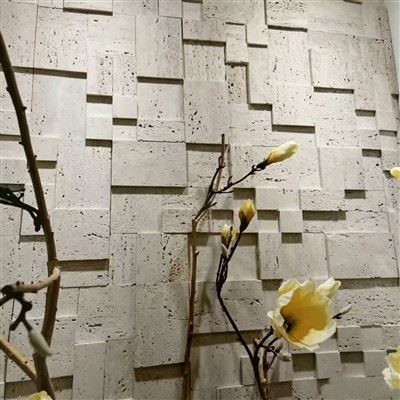
If you’re working on a project and you want to learn more about PUstone’s flammability, or if you have specific questions about how it would work for your space, our team is here to help. We provide free sample testing for commercial clients, and we can walk you through all the third-party test reports, so you can make an informed decision. Whether you’re renovating a small kitchen or outfitting a multi-story office building, we’re here to discuss your needs and find the right PUstone solution for you.
Flexible Stone References
ASTM E84-21, Standard Test Method for Surface Burning Characteristics of Building Materials
EN 13501-1:2019, Fire classification of construction products and building elements – Part 1: Classification using data from reaction to fire tests
National Fire Protection Association (NFPA) 70, National Electrical Code, Article 314 (Receptacle and Fixture Placement)
Comprehensive Study of Composite Solid Surface Materials: Flammability, Smoke Emission, and Thermal Performance, Journal of Building Materials and Construction Sciences, 2022
Linyi Haituo New Materials Co., Ltd.
Address: 1116, Building B04, Lushang Center, Liuqing Street, Lanshan District, Linyi City, Shandong Province
E-mail: sales@wenxingbuild.com
WebSite: https://www.haituonewmaterial.com/
