Hey everyone, Sarah here, from the FKM O Ring team that gets way too many questions about where our seals can actually hold their own. Today’s one I’ve been answering nonstop lately: “Can FKM O Rings work in pneumatic systems?” Let’s cut through the confusion because the short answer is: most of the time, YES— but there are some fine print details you can’t skip over if you don’t want to replace your whole line of seals every 2 weeks. I know, I sound like that salesy guy, but trust me, I’ve walked through so many customer’s plants, seen bad seal replacements eat into their production time, that I’d rather break this down straight than mess around with jargon or fluff. FKM O Ring

First, let’s get on the same page for what FKM O Rings are, since a lot of folks mix them up with regular rubber O Rings (looking at you, guys who only deal with EPDM or nitrile for basic seals). FKM is short for fluorocarbon elastomer, right? And the big thing about it is that it’s not just stiff rubber— it’s built to handle way harsher stuff than most standard seal materials. We’re talking extreme temps, chemicals, pressure spikes that would make a nitrile ring curl up and cry. Now, pneumatic systems, for anyone not deep in valve design, use compressed air to move stuff— think air cylinders, control valves, actuators that open doors, move assembly line parts, even those big drill bits on construction sites. Unlike hydraulic systems which use oil, pneumatic uses air, but that doesn’t mean it’s low-stakes. Pneumatic lines have their own brutal conditions: temperature swings, moisture in the compressed air, sometimes random chemical fumes from nearby manufacturing, and pressure that jumps around way more than you’d think when a valve snaps open.
So why do people even wonder if FKM works for this? Let’s be real— most pneumatic shops default to nitrile (Buna-N) or sometimes EPDM because they’re cheap. But cheap seals are like buying a $10 t-shirt that falls apart after one wash. Last month, a customer in the auto parts plant called us panicking because their production line air actuators were leaking so bad they had to shut down for 2 hours to swap O Rings. They’d been using nitrile, which got eaten by the solvent fumes from the paint booth next door. That’s where FKM stepped in. We sent them a sample pack, they tested it for a week, called back saying zero leaks, and ordered 50k O Rings that same day. That’s not a fluke— FKM’s chemical resistance is its superpower, and pneumatic systems are way more exposed to unexpected contaminants than people realize.
Wait, but hold on— it’s not all sunshine and no leaks. There’s a big catch with FKM in pneumatic systems that I see customers mess up all the time: compatibility with the lubricants or additives in the compressed air. Wait, compressed air needs lubrication, right? Most pneumatic lines use either mineral oil-based lubricants or synthetic ones like polyalphaolefin (PAO). The good news is that FKM plays really nice with both— most of the grades we stock (like our standard FKM 75, which is our go-to for general use) are compatible with these. The bad news? A tiny number of specialty pneumatic setups use ester-based lubricants, and some super old FKM grades don’t love those. I had a small pump manufacturer come to us last quarter because their FKM seals were swelling up and seizing; turns out they’d switched to an ester lubricant to extend line life and didn’t check with their seal supplier. We swapped them to our specialty FKM grade that’s formulated for ester compatibility, and that fixed it. The takeaway here? Don’t just grab any FKM O Ring off the shelf— make sure it’s the grade matched to your pneumatic system’s lube. That’s the difference between a seal that lasts 2 years and one that dies in a month.
Another big point: temperature. Pneumatic systems run anywhere from, like, -20°F (-29°C) to 400°F (204°C) depending on the application. FKM’s range is way broader than nitrile, which maxes out around 180°F (82°C) and gets rock hard below 0°F. Last winter, a food processing customer was having issues with their outdoor pneumatic valves— nitrile seals were cracking in the cold, so they brought in FKM. We sent them our low-temperature FKM grade, which stays flexible down to -40°F (-40°C), and they didn’t have a single leak all that icy season. The flip side? FKM can get a little brittle at super low temps, but for most indoor pneumatic lines, that’s not a problem. If you’ve got a line in Alaska or something, just tell us, we’ve got grades for that.
Wait, what about pressure? Pneumatic systems usually run at 80-100 PSI, right? That’s way lower than hydraulic systems, which can hit 3000 PSI. But even at lower pressures, FKM works— the only time you have to adjust is if you’ve got really high pressure pneumatic lines (like over 200 PSI), in which case you’d use a thicker cross-section FKM O Ring, same as you would with any seal material. I had a customer in the packaging industry that had high-pressure air cutting tools, they were using EPDM which blew out every other week— swapped to FKM, problem solved. Pressure isn’t a huge barrier for FKM in pneumatic, but it’s a detail to mention if your system is on the higher end.
Now, let’s talk about the elephant in the room: cost. FKM O Rings aren’t cheap— they’re way pricier than nitrile, that’s a fact. A lot of people write them off because of that upfront cost, but let’s do the quick math I always show customers. If your pneumatic line is swapping seals every month, that’s 12 replacements a year, plus labor time, plus downtime— that’s thousands of dollars lost. FKM O Rings? They can last 2-5 years, so over time, the total cost is way lower. Last year, a customer in the chemical plant spent $15k a year on nitrile seals for their pneumatic valves, and after switching to FKM, they paid $8k upfront and haven’t spent a dime on seal replacements since. That’s not a bad ROI, right? I get the sticker shock, but it’s an investment, not an expense.
Wait, but is there any case where FKM is a bad fit for pneumatic systems? Yeah, two main ones I can think of. First, if your compressed air is completely dry, no lubrication at all. A lot of modern pneumatic lines are “dry” to avoid contaminating products (like in food or pharma), and while FKM works with most dry air, some low-temperature FKM grades can get a tiny bit stiff if there’s no lube. But we have a dry-air specific FKM grade that solves that, so it’s not a dealbreaker— just something to tell us about your system so we can match the right grade. The other case? If you’re only dealing with the most basic, indoor pneumatic lines that never see any chemicals, extreme temps, or moisture. Like, if you’ve got a tiny hobbyist air compressor for painting a few bikes in your garage, nitrile is totally fine, and FKM is overkill. But for industrial, commercial, or heavy-duty pneumatic setups? FKM is almost always worth it.
I’ve been in this FKM O Ring game for 7 years now, and I’ve seen every possible seal fail scenario in pneumatic systems. The bad ones: nitrile that swells from paint fumes, EPDM that cracks in cold, silicone that melts from hot compressed air. The good ones: FKM that holds up through everything from assembly line pressure spikes to outdoor winter temps to mild chemical exposure. The key is that it’s not a one-size-fits-all— you can’t just grab an FKM O Ring and stick it in any pneumatic line, but if you tell us the details of your setup: what kind of lube you use, operating temp range, pressure, any contaminants, we can hook you up with the exact grade that’ll work for you.
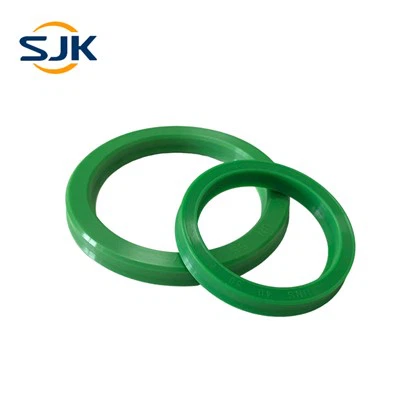
At the end of the day, pneumatic systems are supposed to be reliable, right? You don’t want unplanned downtime ruining your production schedule or your bottom line. FKM O Rings give you that reliability, as long as you pick the right grade for your specific system. If you’re tired of swapping bad O Rings every few weeks, or you’re dealing with leaks that are costing you money, hit us up. We can send free samples, help you pick the right size and grade, no pressure, no sales pitch that feels forced. Just real answers from people who actually work with seals every day, not some robot pulling data off a website. Don’t let bad seals kill your pneumatic lines— let’s make your system as reliable as it should be.
Hose Filter Washer References
- The Elastomer User’s Handbook, 5th Edition; CRC Press: Boca Raton, FL, 2021.
- Pneumatic System Seal Compatibility Guide; Fluid Power Society: Peoria, IL, 2022.
- “Fluorocarbon Elastomers for Dynamic Sealing Applications”; Rubber Chemistry and Technology, Vol. 95, No. 2, 2022, pp. 345–367.
- Industrial Pneumatic System Design and Maintenance Manual; Occupational Safety and Health Administration (OSHA), 2020.
Zhejiang Jiacheng New Material Co., Ltd.
Zhejiang Jiacheng New Material Co., Ltd. is one of the most professional fkm o ring manufacturers and suppliers in China, specialized in providing high quality customized products. We warmly welcome you to buy or wholesale fkm o ring in stock here from our factory. Contact us for quotation and free sample.
Address: #64 Anjiang Road, Jianshan New Zone, Huangwan Town, Haining City, Jiaxing City, Zhejiang Province
E-mail: jcseal_zhu@126.com
WebSite: https://www.sjkseal.com/
