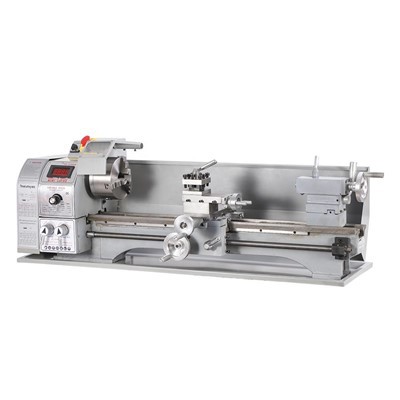
If you’ve ever worked with foam—whether it’s crafting custom props, building acoustic panels, prototyping packaging inserts, or shaping foam for model making—you’ve probably faced the same question: can a standard benchtop drill press handle drilling clean, consistent holes in this soft, often tricky material? As someone who’s spent the last 12 years selling benchtop drill presses to hobbyists, small manufacturers, and craft studios, I hear this question at least twice a week. The short answer is yes, but only if you understand how to adapt your setup, tool choice, and technique to avoid the most common (and frustrating) mistakes with foam drilling. Let’s break this down based on real-world use cases from the shops I support, the science of foam’s physical properties, and the capabilities of quality benchtop drill presses. Benchtop Drill Press
First, let’s get one thing straight: foam isn’t a monolith. Not all foam behaves the same way when drilled, and that’s a critical starting point. Most people think of foam as soft, squishy, and easy to damage, but there are big differences between the closed-cell rigid foam used for insulation and marine projects (think XPS or extruded polystyrene, which is dense, relatively stiff, and has a smooth outer skin) and open-cell low-density foam used for packaging, props, or acoustic padding (which is lighter, more porous, and prone to tearing or crumbling when mishandled). The good news is that a benchtop drill press works for both—you just need to adjust your approach for each type.
Let’s start with why a benchtop drill press is actually a great fit for foam drilling, rather than just a dangerous overkill tool. Benchtop drill presses are designed for precision: they move the drill bit straight down along a fixed axis, with consistent speed control and depth stop functionality. That level of control is exactly what you need for foam, because the biggest risk when drilling foam with a hand drill (or even a router) is wandering, uneven holes, or the drill bit grabbing the foam and yanking it across your work surface. I’ve seen too many hobbyists waste hours of work because their hand drill slipped, leaving a lopsided hole that ruined a custom prop base or a fitted packaging insert. A benchtop drill press eliminates that risk almost entirely, as long as you pair it with the right accessories.
Now, the most important part: drill bit choice. This is where most new foam drillers go wrong. A standard high-speed steel (HSS) twist bit designed for wood or metal will absolutely tear, melt, or crumble foam if you use it. The sharp, aggressive flutes on a standard twist bit dig into the foam’s cell structure too quickly, especially for low-density open-cell foam, causing the material to pull away from the hole wall or create rough, frayed edges. For foam, you need two specific types of bits, depending on the foam density:
For closed-cell rigid foams (XPS, EPS, polystyrene insulation foam): A Forstner bit or a spur point bit works best. Forstner bits have a flat bottom and sharp, centered spur that cuts a clean circle before the flutes remove material, which means less grabbing and more precise holes. Spur point bits (sometimes called “Brad point” bits) are similar but have a small pointed tip at the center that guides the bit perfectly, so it won’t wander even into dense foam. I recommend 1/8-inch to 1-inch bits for most small to medium projects, and larger bits (up to 3 inches) for bulk insulation or craft projects—all of these bits work perfectly with a benchtop drill press, as long as you keep speeds moderate.
For open-cell low-density foams (polyethylene craft foam, polyurethane acoustic foam, packaging foam): Here, the gold standard is a foam-specific core drill bit, or even a hole saw with the teeth filed down slightly. Core drill bits for foam have wide, shallow flutes that don’t grab the soft foam, instead cutting through the material cleanly and carrying away the small bits of foam dust without tearing the hole wall. A trick I share with new customers is that if you don’t have a foam-specific core bit, take a standard 1-inch hole saw and use a flat file to round off the sharp front edges of the teeth—this eliminates the catching that turns a clean hole into a mess of crumbled foam. And yes, these bits work seamlessly on a benchtop drill press, because the press’s consistent downward pressure keeps the bit moving straight, without the wobble that makes hole saws dangerous on hand drills.
Next, speed control. This is where the benchtop drill press’s adjustable speed setting becomes a superpower for foam. If you drill foam too fast, two bad things happen: the bit generates friction heat, which melts the foam around the hole, leaving a sticky, uneven edge, and the bit spins so quickly that it shreds the foam’s cell structure instead of cutting it cleanly. The sweet spot for foam drilling is between 500 RPM and 1,500 RPM—much lower than the 3,000+ RPM you’d use for wood or metal. Almost all quality benchtop drill presses have variable speed control, so you can dial this in perfectly for your foam type: use 500-1,000 RPM for dense closed-cell foam, and 1,000-1,500 RPM for lighter open-cell foam. I’ve seen customers try to use their drill press on a fixed high speed setting for foam and end up with melted holes that they had to sand smooth for hours—adjustable speed is non-negotiable here.
Then there’s workholding, another area where a benchtop drill press outperforms other tools for foam. Foam is soft, so if you just lay it on your drill press table and drill, the downward pressure of the bit will push the foam down, creating a hole that’s deeper on one side or uneven in diameter, or even causing the entire piece to shift mid-drill. The solution is simple, and it’s easy to set up right on your benchtop drill press: use a sacrificial work surface under your foam, and a light clamp or weight on top to hold it in place without compressing the foam. A 1/4-inch thick piece of MDF or plywood works perfectly as a sacrificial layer—this stops the bit from drilling into your drill press table and gives you a clean exit hole without tear-out. For workholding, I recommend using two small spring clamps on the edges of your foam, tightened just enough to hold it steady (don’t over-tighten—compressing foam changes its dimensions, and you’ll end up with a hole that’s smaller than expected). For larger foam pieces, a few 1-pound weights (like steel barbell weights or even clean cans) placed on the corners work just as well, so you don’t have to drill around bulky clamps.
Now, let’s address the biggest concern most people have: is it safe to drill foam on a benchtop drill press? The short answer is yes, as long as you follow basic safety rules, which are actually simpler for foam than for other materials. You don’t have to worry about dangerous kickback with foam, because the material is light and soft, so the bit won’t yank it across the table. The only safety steps to follow are: wear safety glasses to keep any small foam chips out of your eyes (they’re not dangerous, but they’re annoying), make sure your depth stop is set correctly so you don’t drill all the way through your work piece if you don’t want to, and never leave the drill press running while it’s not in use. I’ve had hundreds of customers drill thousands of holes in foam on their benchtop drill presses without a single safety incident—this isn’t a high-risk operation, as long as you use the right setup.
Let’s back this up with a real example from a customer I worked with last year: a small acoustic panel manufacturer in Chicago. They were drilling hundreds of 2-inch holes in 2-inch thick open-cell polyurethane foam for sound absorption panels, and they were using hand drills to do the job. They were spending 2 hours per panel, with an average of 1 out of every 5 panels having a ruined hole from hand drill wander or bit grabbing. When they switched to a mid-range benchtop drill press with variable speed and a set of foam core bits, their time per panel dropped to 20 minutes, and their defect rate went down to less than 1%. They told me the drill press was the best investment they’d made all year, specifically for the foam drilling work. That’s not an anomaly—craft studios, prop makers, and packaging designers all tell me the same thing: the precision of a benchtop drill press makes foam drilling way less frustrating and way more consistent than using other tools.
Now, let’s address the one caveat: if you have a very low-end, fixed-speed benchtop drill press with no speed adjustment, and it only goes up to 3,000 RPM, it’s going to be hard to get a good result with foam. The high speed will melt the foam, as I mentioned earlier. That’s why it’s worth investing in a benchtop drill press with variable speed control if you plan to drill foam regularly—most models in the $300 to $800 range have this feature, and it’s useful for all kinds of other projects too, from drilling small holes in metal to working with wood. Even if you only drill foam occasionally, a variable speed benchtop drill press will give you the flexibility to adjust to different materials as your projects change.
So, putting it all together: yes, a benchtop drill press is absolutely suitable for drilling holes in foam, as long as you pair it with the right bits, adjust the speed to the correct range, use proper workholding to prevent shifting, and avoid the common mistakes of using the wrong bit or drilling too fast. It’s actually one of the best tools for the job, because its precision eliminates the inconsistencies and mess that come with using hand drills for foam work.
If you’re ready to upgrade your foam drilling setup, or if you’re in the market for a benchtop drill press that’s built to handle foam (and all your other workshop projects), I’m here to help. I can walk you through the best model for your specific needs, whether you’re a hobbyist doing small craft projects or a small manufacturer drilling bulk holes in foam for commercial products. Just reach out to discuss your requirements, and I’ll give you personalized recommendations and advice to make sure you get the right tool for the job.
Metal Lathe References
ASTM D3574, Standard Test Methods for Flexible Cellular Materials—Slab, Bonded, and Molded Urethane Foams
Machinery’s Handbook, 31st Edition, Drill Bit Selection for Non-Metallic Materials
Foam Industry Association, Best Practices for Machining and Drilling Polymeric Foams
YS Machine Tools Co., Ltd.
We’re well-known as one of the leading benchtop drill press suppliers in China, featured by quality products and good service. Please rest assured to buy customized benchtop drill press at competitive price from our factory. Contact us for more details.
Address: 300 Sandusky st, Ohio, 43611, USA
E-mail: yishoumachinetools@gmail.com
WebSite: https://www.ysmachinetool.com/
