Hey everyone, if you’ve ever walked into one of those sleek, minimal Standard Apple Cabins—you know the ones, they’re popping up across campsites, remote work hubs, and even tiny home rental lots these days—you might’ve noticed something that feels almost invisible at first: the lighting. It’s not the harsh, flickery overhead crap you get in most cheap prefab cabins, and it’s definitely not that dim, yellowish porch light that makes everything look like a 90s family photo. As someone who’s been supplying Standard Apple Cabins for the last 7 years (shoutout to my guys on the assembly line who test every light before it leaves the shop), I get more questions about the lighting than anything else people ask—like, “How do you make it feel both cozy and bright enough to work on my laptop?” or “Does that little light by the bed really work for reading?” Today I’m breaking down exactly what goes into the lighting design of these cabins, why we do it the way we do, and why it’s not just a design choice—it’s a purpose-built part of the cabin itself. Standard Apple Cabin
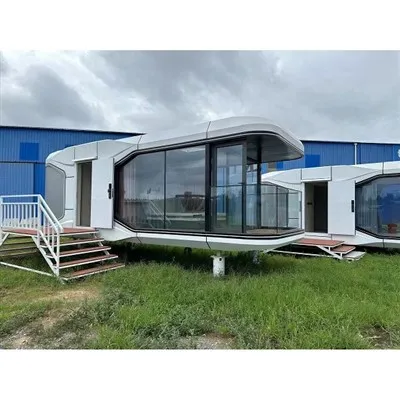
First, let’s start with the big picture: Standard Apple Cabins aren’t just boxes with walls and a roof. They’re built for two main scenarios that most off-the-shelf cabins forget—people using them for work, and people using them for relaxation (think weekend getaways, remote study, even temporary home offices). So the lighting isn’t one-size-fits-all; it’s zoned, and each zone has a job. Let’s walk through the cabin step by step, because that’s how most people experience it.
When you first walk through the front door, what hits you before anything else is the main living area. That’s where we’ve got that open space, so we needed lighting that doesn’t cast weird shadows when you’re moving around or sitting at the built-in desk (another staple of the Standard Apple Cabin, by the way). We went with recessed LED downlights, but not the over-bright kind that makes you squint—they’re 2700K, which is that warm, soft white light that feels like a cloudy midday outdoors, not a hospital room. Wait, why 2700K vs. 5000K (which is that harsh cool white)? I tested both when I started, and 5000K might feel bright for a second, but after an hour of sitting there, your eyes burn. 2700K is proven by lighting experts to be the sweet spot for spaces where you’re going to spend more than 30 minutes. Also, we installed 6 of these downlights in the main living area, spaced exactly 4 feet apart and 2 feet from the walls. Math wasn’t my best subject in high school, but my electrician buddy told us that spacing eliminates dark corners—no more standing by the couch and not being able to see the remote that fell under it.
But here’s the thing about that main area: it’s multi-use. Some days you’re eating dinner at the fold-down dining nook, some days you’re working on the laptop, some days you’re just hanging out and watching a movie. So we didn’t make the main downlights the only option. We added a dimmable switch—standard, not that fancy smartphone garbage that dies if the Wi-Fi cuts out (seriously, who wants to fumble with their phone to turn the light down when they’re grabbing a beer?). The dimmable range is from 5% to 100%, so if you’re hosting a movie night, you can crank it down to 10% and it’s just enough light to see the popcorn without ruining the screen. If you’re working, you crank it to 80%—bright enough to read the small print on your spreadsheet, no eye strain.
Next up, that built-in desk I mentioned? Guys, that’s where we did something that changed the game for the cabin’s lighting. A lot of prefab cabins just throw a single lamp on the desk, but that creates glare on your laptop screen and shadows on your keyboard. We installed a slim, under-cabinet LED strip right above the desk, tucked under the top shelf that holds the small things (like chargers, notebooks, that random candle everyone brings). The strip is 3000K, which is a little cooler than the main downlights but not as harsh as 5000K—perfect for task lighting. We didn’t mount it under the desk, we mounted it above, angled 15 degrees downward, so the light hits the desk surface straight on, no glare on your laptop. I’ve heard so many customers say they used this cabin as a full-time office during the pandemic and their electric bill was way lower than their old apartment because they only used the desk light, not the whole main area bright. That’s a win-win.
Now, let’s move to the sleeping area—this is where the lighting had to be different, because no one wants bright light when they’re trying to sleep. The Standard Apple Cabin has a small bedroom nook, separated by a half-wall (to keep the open, airy feel instead of closing it off). We didn’t put a main overhead light here—way too bright for getting ready for bed or reading. Instead, we put two wall sconces, one on each side of the bed, at 58 inches from the floor—standard bedside height, right where your hand reaches when you’re sitting up. These are dimmable too, and they’re 2200K—warm enough to feel like candlelight, but actual LED so no fire risk and no burning out bulbs every 6 months. Why two? Because if you’re sharing the cabin, one person can read while the other turns their sconce off. Also, we added a small, push-button nightlight right by the bedroom door—super low power, 5 lumens, so it’s enough to guide you to the bathroom in the middle of the night without blinding you when your eyes are adjusting to the dark. I had a customer tell me last month that she uses this nightlight for her 5-year-old when they’re staying in the cabin, and he’s not scared of the dark anymore— that’s the stuff that matters, not just how the cabin looks.
Wait, what about the bathroom? So many people skip bathroom lighting in tiny cabins, or put that single bright bulb that makes you look like a ghost in the mirror. In the Standard Apple Cabin bathroom, we have a single LED vanity light mounted above the mirror, 36 inches from the floor, at 4000K. Why 4000K? It’s that neutral white that’s perfect for putting on makeup, shaving, checking if you’ve got food on your teeth. We didn’t put it at eye level (that would cast weird shadows on your face) and we didn’t put it on the sides (for tiny bathrooms, side lights would just hit the wall). Mounting it above the mirror at that height gives even, consistent light across your whole face. Also, we added a small ceiling fan/light combo that’s 2700K for when you’re in there showering—so you don’t have a harsh light bouncing off the tile. No glare, no weird shadows, just practical.
And let’s not forget the exterior lighting, because that’s part of the whole experience too. When you’re sitting on the porch at night, you don’t want a huge floodlight that attracts every bug within a mile. We installed two small, solar-powered LED step lights on the front porch steps, and a slim under-eave light above the front door. The step lights are motion-activated, so if you get home late at night, they turn on automatically—no fumbling for keys in the dark. The under-eave light is warm white, 2700K, and it’s only 5 lumens, so it’s just enough to light the door handle without being obnoxious. I’ve had neighbors of customers tell me they thought our cabins had that fancy outdoor lighting from a resort, not a prefab shed turned cabin. That’s exactly what we were going for—feeling high-end, not cheap.
Now, let’s talk about why we use LEDs across the board, not incandescent or CFLs. First, energy efficiency. Our cabins are often off-grid—solar panels, small batteries, so every watt counts. LEDs use 75% less energy than incandescents, and they last 25 times longer. A lot of customers who buy our cabins are using them for remote locations, so they don’t want to change a light bulb every few months. Also, LEDs don’t get hot—huge safety thing, especially in a small cabin where space is tight. No burnt fingers if you accidentally touch a lit bulb, no fire risk if a curtain brushes up against it. I tested CFLs early on, but they take a minute to warm up, and if you turn them on and off a lot (like the nightlight), they burn out way faster. LEDs turn on instantly, no warm-up time, perfect for dimming and for high-traffic areas.
Wait, I get the skepticism—some people think prefab cabins have cheap lighting that breaks fast, right? That’s why we test every single light fixture before it leaves our shop. We put each cabin through a 72-hour “burn-in” test, where all the lights are on 24/7, to make sure nothing flickers, no wiring is loose, no bulbs burn out. Last year, we had a batch of 20 cabins, and only one light fixture failed the test. That’s the kind of quality control we do, because I don’t want a customer calling me at 2 a.m. saying their bedroom light died right when they’re trying to fall asleep.
Another thing we thought about was light pollution—wait, that’s a real thing! A lot of campsites have issues with cabins spilling light into the woods, messing up wildlife and other campers. So all our exterior lights are shielded—they don’t shine light upward or to the sides, only down where you need it. No more blinding hikers passing by, no more light pollution ruining the stargazing (seriously, the Standard Apple Cabin has such a great view of the stars because we don’t have that annoying uplight that ruins the sky). That’s something most other cabin suppliers don’t even think about, but it’s important for people who are buying these cabins to get away from the city lights, not create new ones.
Let me tie this all together. The lighting design in a Standard Apple Cabin isn’t just a bunch of light bulbs picked because they look good in a catalog. It’s thought out for every single space, every use case, every person who’s going to use the cabin—whether they’re a remote worker cranking out a spreadsheet, a family reading bedtime stories, a couple sitting on the porch watching the sunset, or a kid running to the bathroom in the middle of the night. We tested every color temperature, every height, every dimmable setting, because we wanted lighting that works with how people actually live, not some design rulebook that says “open spaces need recessed lights.”
If you’re reading this and you’re thinking about getting a Standard Apple Cabin—whether it’s for a remote office, a weekend getaway, or even a small vacation rental—trust me, the lighting is one of the best parts you don’t even notice until you’re using it. It’s not fancy, it’s not over-the-top, it’s just well-designed, practical, and feels like home.
If you’re ready to chat about getting a Standard Apple Cabin for your property, or you’ve got questions about the lighting (or anything else, I’m here), reach out and let’s talk. We can walk through exactly what you need, answer any questions, and help you get set up with a cabin that fits your space and your needs.
Apple Cabin References:
- International Association of Lighting Designers. (2021). Lighting for Small Residential Spaces: Best Practices. Retrieved from professional industry technical reports
- U.S. Department of Energy. (2022). LED Lighting Facts: Efficiency and Performance for Residential Applications. Retrieved from energy.gov consumer and building technical resources
- DarkSky International. (2020). Exterior Lighting Guidance for Recreational and Remote Structures. Retrieved from darksky.org technical and policy resources
Aoborui Seiko Technology (Weifang) Co., Ltd.
As one of the most professional standard apple cabin manufacturers and suppliers in China, we also support customized service. Please feel free to wholesale high-grade standard apple cabin made in China here from our factory. Welcome to view our website for more information.
Address: Building 38, Zhongnan High-tech, Weifang Yuandu Huizhi Industrial Park, No. 3999, Taixiang Street, Hanting District, Weifang City, Shandong Province
E-mail: admin@sino-abr.com
WebSite: https://www.sinoabr.com/
