Hey there! I’m a supplier of resistance testers, and today I wanna chat about whether a resistance tester can measure the resistance of a flow sensor. Resistance Tester
First off, let’s get a bit of background. Flow sensors are super important in loads of industries. They’re used to measure the flow rate of liquids or gases in pipes, ducts, and all sorts of systems. There are different types of flow sensors out there, like thermal, ultrasonic, and electromagnetic ones. Each type works in its own unique way to figure out the flow rate.
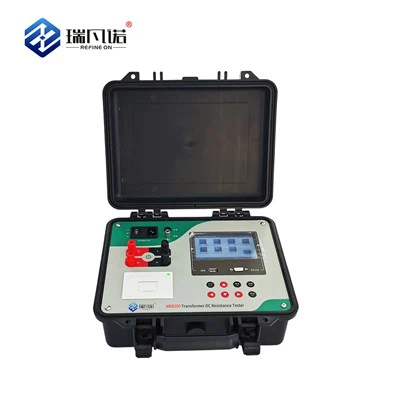
Now, resistance testers, well, that’s what we sell. Our resistance testers are designed to accurately measure the electrical resistance of various components. They’re super handy for checking if a component is working properly or if there are any issues with the electrical circuit it’s part of.
So, can a resistance tester be used to measure the resistance of a flow sensor? The answer is, it depends.
Let’s start with the basic principle. A resistance tester passes a small electrical current through a component and then measures the voltage drop across it. Using Ohm’s Law (V = IR, where V is voltage, I is current, and R is resistance), it can calculate the resistance. For some flow sensors, this might work just fine.
Take, for example, a simple resistive flow sensor. In these sensors, the resistance changes based on the flow rate. The more fluid is flowing, the more the resistance changes. This is like a variable resistor. Our resistance tester can definitely be used to measure the resistance of such a sensor. You just connect the tester to the appropriate terminals of the flow sensor, and it’ll give you a reading of the resistance. This reading can then be correlated to the flow rate using a calibration curve provided by the sensor manufacturer.
But here’s the thing. Not all flow sensors are resistive. Some flow sensors, like ultrasonic flow sensors, work based on the principle of how sound waves travel through the fluid. They use transducers to send and receive ultrasonic waves, and the time it takes for the waves to travel is used to calculate the flow rate. These sensors don’t rely on changes in electrical resistance to measure flow. So, if you try to use a resistance tester on an ultrasonic flow sensor, you’re not gonna get any meaningful data about the flow rate. The resistance measured by the tester won’t have any direct relation to the actual flow happening in the system.
Another type of flow sensor is the electromagnetic flow sensor. These sensors work on the principle of Faraday’s Law of electromagnetic induction. When a conductive fluid flows through a magnetic field, an electromotive force (EMF) is generated. The magnitude of this EMF is proportional to the flow rate. Just like the ultrasonic sensors, the resistance isn’t a key factor in measuring the flow. So, again, using a resistance tester on an electromagnetic flow sensor won’t tell you much about the flow rate.
So, in summary, if you’re dealing with a resistive flow sensor, a resistance tester can be a useful tool to measure its resistance, which in turn can give you an idea about the flow rate. But for non – resistive flow sensors like ultrasonic or electromagnetic ones, a resistance tester isn’t gonna provide relevant information about the flow.
Now, let’s talk about some practical aspects. When using a resistance tester to measure the resistance of a resistive flow sensor, there are a few things to keep in mind.
Accuracy is crucial. You wanna make sure your resistance tester is accurate. Our resistance testers are calibrated to high standards, which means you can trust the readings. A small error in the resistance measurement can lead to a big error in the calculated flow rate, especially if the calibration curve is steep.
Connection is also important. You need to connect the tester correctly to the flow sensor. Make sure the connections are clean and tight. A loose connection can cause a high – resistance path, which will give you an inaccurate reading.
Environmental conditions can affect the resistance measurement too. Factors like temperature and humidity can change the resistance of the sensor. Some flow sensors have built – in temperature compensation, but if not, you might need to take these factors into account.
If you’ve got a resistive flow sensor and you’re looking for a reliable resistance tester, we’ve got you covered. Our resistance testers are easy to use. They’ve got a simple interface, and you can get quick and accurate readings. Whether you’re in a factory doing regular maintenance checks on your flow sensors or you’re an engineer working on a new project that involves flow sensors, our testers are a great choice.
If you’re interested in using our resistance testers to measure the resistance of your resistive flow sensors or just wanna learn more about them, don’t hesitate to reach out. We’re here to help you with any questions you might have and to guide you through the process of choosing the right tester for your needs.
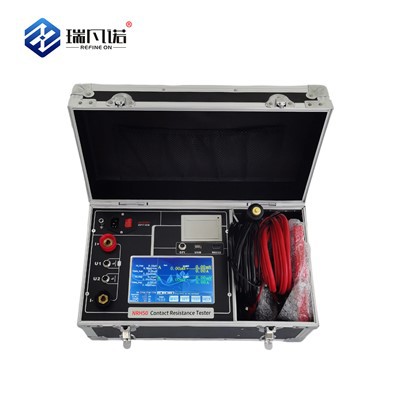
In conclusion, while a resistance tester can be a valuable tool for measuring the resistance of resistive flow sensors, it’s not suitable for all types of flow sensors. Understanding the type of flow sensor you have is key to deciding whether a resistance tester is the right option for you.
Hipot Tester References:
- "Flow Measurement Handbook" by Ralph W. Miller.
- Technical documents from various flow sensor manufacturers.
Refine On (Hebei) Electric Power Technology Co., Ltd.
Refine On (Hebei) Electric Power Technology Co., Ltd. is one of the most reliable resistance tester manufacturers and suppliers in China, also supports customized service. Please feel free to wholesale advanced resistance tester at competitive price from our factory. Contact us for quotation.
Address: Building 13, Liandong U Valley, No.64, Jing SAN South Street, Economic Development Zone, Mancheng District, Baoding City, China
E-mail: victor@transformer-test.com
WebSite: https://www.transformer-test.com/
